How to Change a QR Code's Destination or Link After Printing
Learn how to change your QR Code's destination after creation, even after printing using Uniqode's dynamic QR Code generator-no need to reprint or regenerate.. Covers dynamic QR Codes and static QR Codes workarounds.
Changing a QR Code destination simply means updating the link a QR Code directs to after printing, without replacing the code. Static QR Codes lock the URL into the pattern, so they cannot be edited, and many users realize this only after printing. This guide covers both cases: how to update a dynamic QR Code's destination in a few steps, and three practical workarounds if you're stuck with a static one.
Can you redirect a QR Code's destination?
Yes, you can redirect your QR Code’s destination, provided they are dynamic. Static QR Codes are permanent and cannot be changed once edited. The distinction comes down to how each type stores the destination URL.
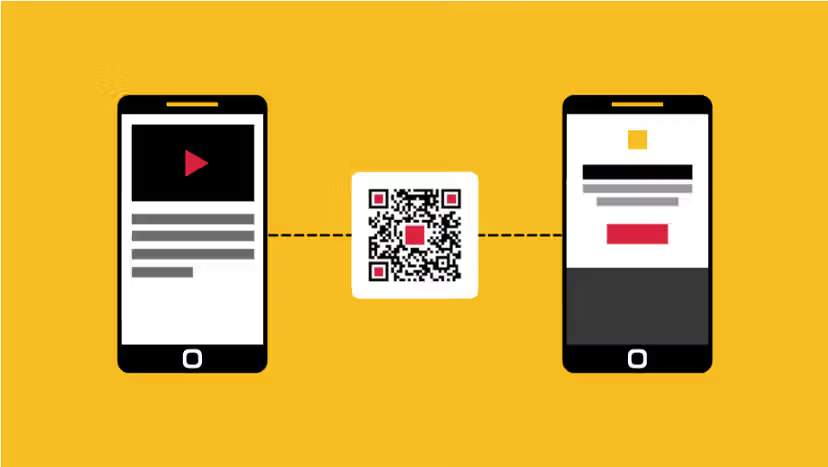
A dynamic QR Code does not encode the destination URL directly. Instead, it encodes a short redirect URL that points to a server record that holds the actual destination. When someone scans the code, the server checks the record and sends them to the destination URL. Change the record, and you change where every future scan goes. The printed QR Code pattern stays identical.
A static QR Code encodes the destination URL directly in the black-and-white pattern. There is no server record to update. The URL is the pattern. Change the destination, and you need a new pattern, which means a new QR Code.
73% of marketers using dynamic QR Codes report lower print material costs, according to Uniqode's State of QR Codes report. The main reason: they can update destinations rather than reprinting whenever a URL changes.
If you need to identify your QR Code type, log in to the platform you used to create it. If you have a dashboard showing the code and its linked URL, it is dynamic and you can edit the existing QR Code online. If you can only find the downloaded image with no account attached, it is static.
→Related: Static vs. dynamic QR Codes
How to change or redirect your QR Code's destination on Uniqode (3 steps)
Updating a dynamic QR Code's destination in Uniqode takes about 30 seconds. The change applies to all future scans immediately, with no new code and no new print run.
Step 1: Log in to your Uniqode dashboard and open your QR Codes list
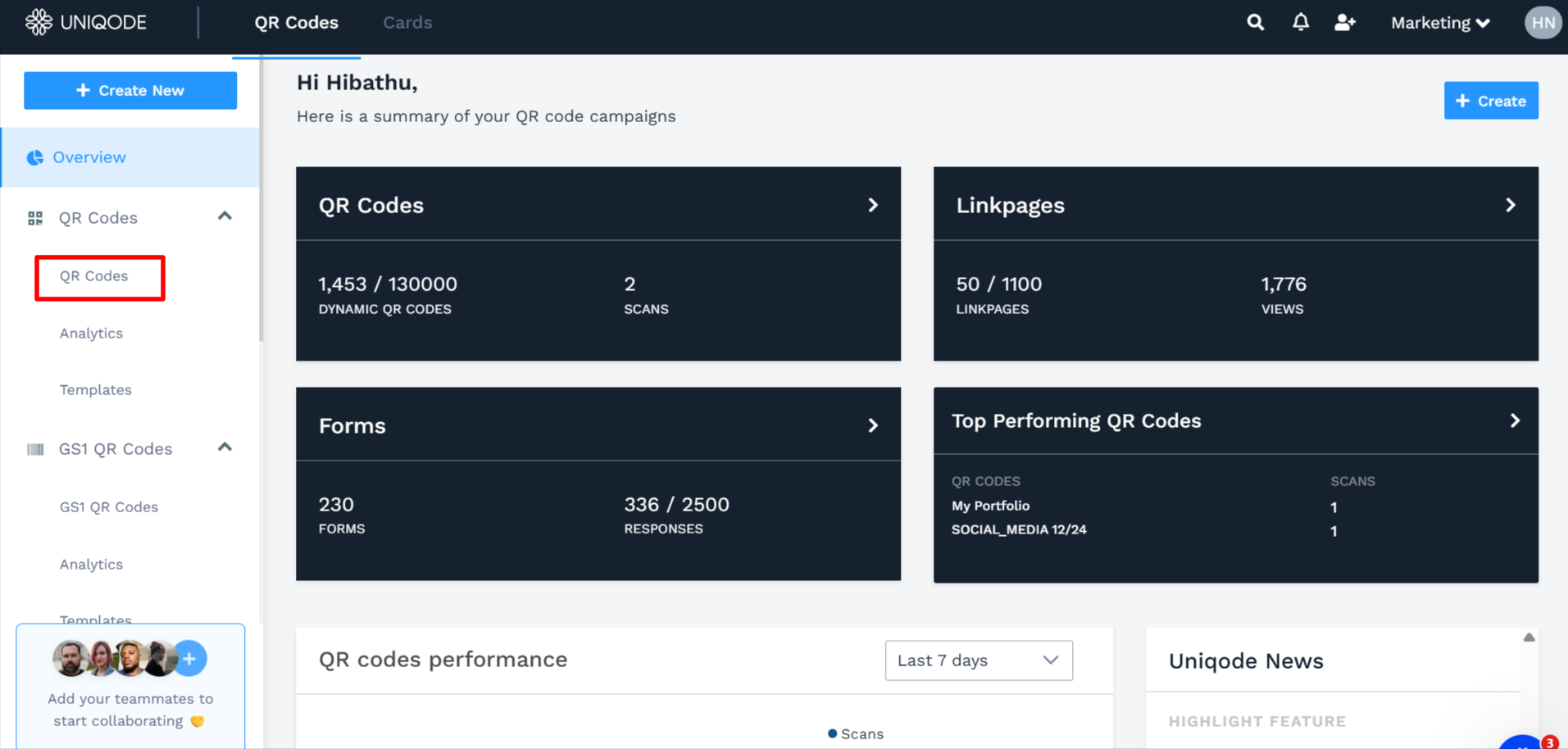
Navigate to the QR Codes section on the left side of the dashboard. You will see all your active codes listed with their current destinations displayed alongside.
Step 2: Select the QR Code you want to update
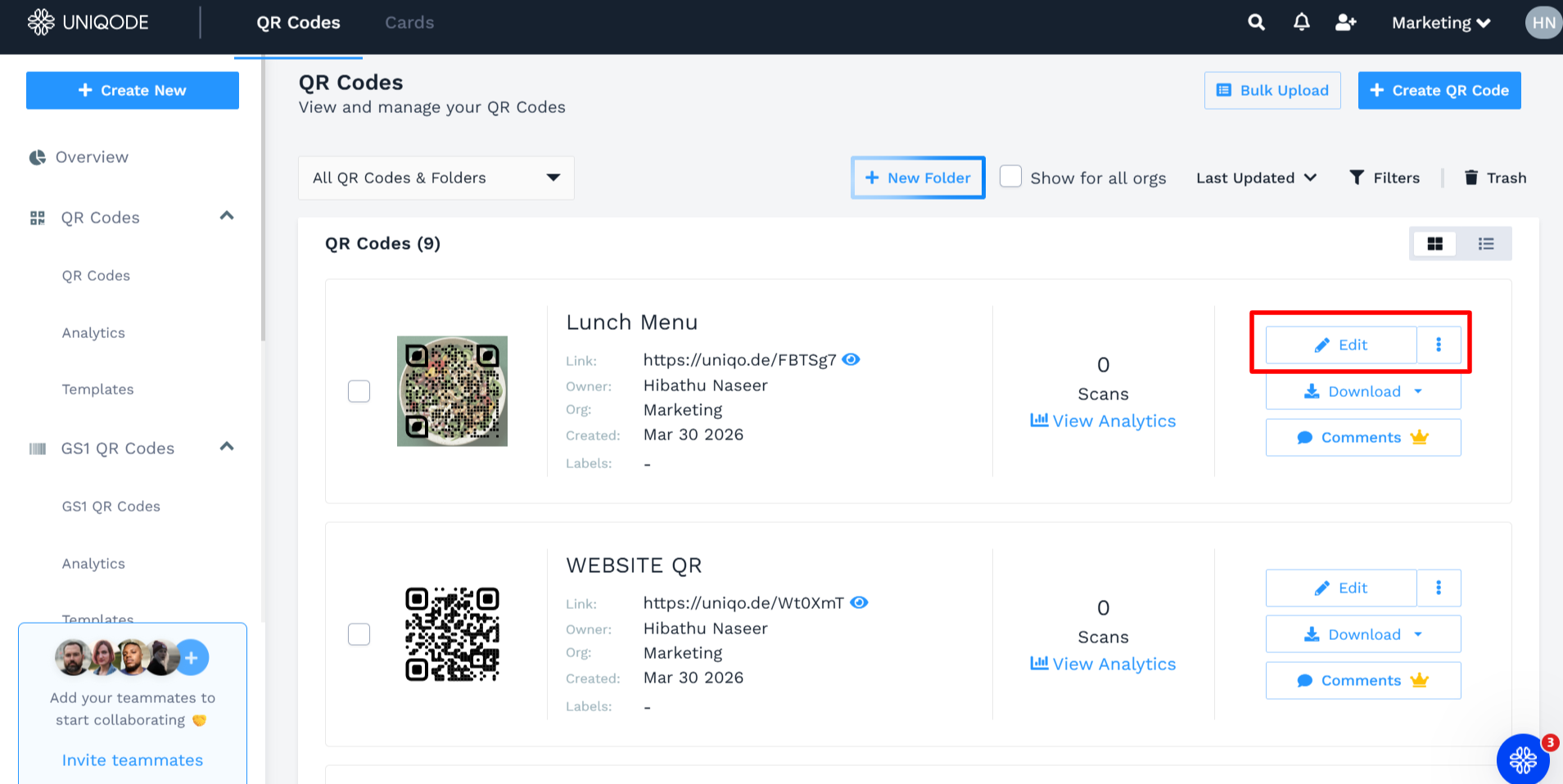
Locate the QR Code you want to change and select Edit. This opens the code's settings.
Step 3: Update the destination URL and save
Navigate to the Setup tab, where you will see the Website URL field. Replace the existing URL with the new one.
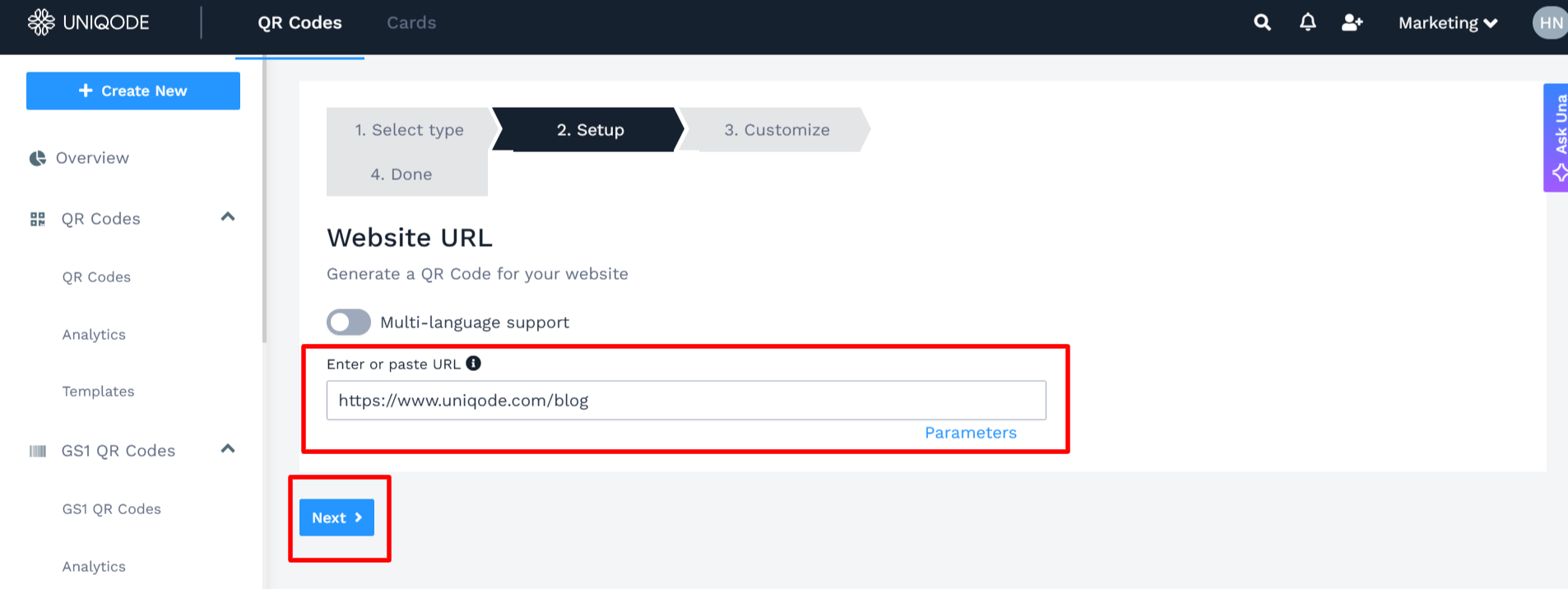
Click Next. This will take you to the Customize tab. If you don’t have any customization edits to make, click Next, and then Finish. The change is live immediately, and every future scan of that printed QR Code redirects to the new destination.
One thing to keep in mind before you update is that changing the destination URL in Uniqode does not reset your scan data. Historical scan counts, device breakdowns, and location data all carry over. Only future scans go to the new destination. Your QR Code's scan analytics stay intact.
→Related: How to edit a QR Code
How to test your QR Code after changing the destination
Open your phone's camera app and scan the QR Code. Tap the notification and confirm the new URL appears in the address bar before the page loads. Avoid testing in the same browser tab where you saved the change, as cached pages can show the old destination.
If the old destination still shows, clear your browser cache and scan again. Updates in Uniqode go live immediately, so a cached result is almost always the cause of any mismatch.
What if your QR Code is static?
For static QR Codes, you cannot redirect to a different destination because the URL is encoded in the pattern itself. To point it somewhere new, you have three options depending on your situation.
- Option 1: Create a new dynamic QR Code and replace the printed one Generate a new dynamic QR Code with the correct destination. Any dynamic QR Code platform, including Uniqode, lets you do this in minutes. Then swap out the physical code wherever it appears. This works well for table tents, posters, or stickers. It gets harder when the code is on packaging already in a distribution chain or on assets you can't easily reach.
- Option 2: Set up a server-side redirect at the original URL If you control the domain encoded in the static QR Code, add a 301 redirect at that address. It silently forwards visitors to the new URL. The printed code keeps working. This is the most practical fix for companies with products already in the field. A CPG brand can't reprint shelf packaging, but it can redirect the URL the packaging points to.
- Option 3: Check if your platform offers a dynamic upgrade Some QR Code platforms let you upgrade an existing static code to a dynamic one. Log in to the platform where you created the code and look for an upgrade or edit option. If it's available, you can update the destination without touching the printed code.
When businesses redirect their QR Code destinations: 3 real-world scenarios
Changing a QR Code destination is not a one-off emergency fix. It’s a routine part of managing QR Codes at scale. These three scenarios represent the most common situations where the ability to update destinations becomes a business requirement, not just a convenience.
1. Packaging with a long shelf life (CPG and retail)
Products printed with QR Codes often stay in circulation for months or even years. During that time, campaign landing pages expire, product URLs change during website updates, and brand portals get reorganized. The destination behind the codes needs regular upkeep, even though the packaging remains the same. That also helps reduce costs by avoiding reprinting charges and supports sustainability by reducing unnecessary waste.
CPG teams need to manage an asset that outlasts any single campaign. A QR Code on a product should be treated like a live URL, one that needs ongoing maintenance rather than a one-time print decision.
2. Physical assets that cannot be reprinted on demand (healthcare, fleet, signage)
Some QR Codes are placed on assets that require logistics, scheduling, and costs unrelated to the code itself. Some examples include vehicle wraps, medical equipment, billboards, and building signage.
Updating the destination in a dynamic QR Code dashboard takes under a minute. The alternative (scheduling a reprint, reordering the wrap, and waiting for installation) takes days and costs far more than the URL change justifies. Dynamic codes make the physical asset maintenance cycle and the content update cycle independent of each other.
3. High-volume ongoing management (government and enterprise)
Organizations managing hundreds of public-facing QR Codes across departments, facilities, or service areas do not update destinations at once. They do it on an ongoing basis as pages move, departments reorganize, and service URLs change.
The cost of not maintaining destinations is visible on the consumer side. 29% of consumers have encountered expired QR Code links, according to Uniqode’s latest State of QR Code report. For organizations managing hundreds of codes, broken codes can lead to poor user experiences, lost engagement, and reduced trust in their brand.
For teams managing QR Codes at this scale, time-based routing and location-based routing can take destination management a step further. These tools can automatically route scanners based on when or where they scan, without any manual updates.
Change QR Code destinations without reprinting
Changing a QR Code’s destination is straightforward when the code is dynamic and impossible when it’s static. The real difference is not just flexibility, but how much reprinting, downtime, and manual cleanup you avoid when links change.
For any QR Code that will live on packaging, signage, or other long-term assets, a dynamic setup keeps the printed code useful even when the destination changes. Start Uniqode’s free trial to create dynamic QR Codes that you can update after printing.
Frequently Asked Questions
- Can you change a QR Code link after printing?
Yes, you can change the URL behind the QR Code after printing if it's a dynamic QR Code. The change applies to all future scans automatically, and no reprinting is required. If it is a static QR Code, the link is encoded in the pattern and cannot be changed directly.
- Does changing the destination URL reset my scan analytics?
No. When you update a dynamic QR Code's destination in Uniqode, all historical scan data is preserved. The new destination applies to future scans. Past scan counts, device breakdowns, and location data remain intact.
- Can I redirect a QR Code I did not create?
You can redirect a QR Code only if you have login access to the platform on which it was created. Destination changes require authentication. You cannot update someone else's code without accessing their account. If you received a QR Code from an agency or a vendor and need to change its destination, you need the original platform credentials or a new code created under your own account.
- What happens to my QR Code if my Uniqode subscription expires?
Dynamic QR Codes created through Uniqode stop redirecting when the subscription lapses. People who scan will not reach the destination. Reactivating your subscription restores all codes immediately. If you have codes on long-running printed materials, plan your renewal dates around your print lifecycles, not your campaign calendar.
If you are at the point of creating new QR Codes, the static-versus-dynamic decision is the most consequential one you will make before printing. Dynamic QR Codes cost more upfront. But every time a destination needs updating, the upfront cost becomes the cheaper option by a significant margin.
- How do I fix a QR Code that links to the wrong page?
If it is a dynamic QR Code, log in to the platform where it was created, open the code's settings, and update the destination URL. The fix applies to all future scans immediately. If it is a static QR Code, the wrong URL is encoded in the pattern and cannot be overwritten. Your options are to replace the printed code, set up a server-side redirect at the original URL if you control that domain, or recreate it as a dynamic QR Code going forward.
- Can you edit a QR Code after creating it?
Yes, if it is a dynamic QR Code. You can update the destination URL, and in most platforms including Uniqode, you can also edit the code's design, tracking settings, and campaign labels after creation. The printed pattern does not change regardless of what you update. If it is a static QR Code, none of these edits are possible. The pattern is fixed at the moment of creation.
About the Author
Shashank - Enthusiastic about marketing and improving the ROI of businesses.
Related Posts